


Leveling kit

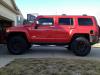

I installed the Truxx Lift level kit several months ago. Works like a charm. Here's why its not a waste for $60.00. First of all without the spacers that go on the torsion bolt, the bolt tops out against the floor pan. Take a look as you tighten it. Only gives you about 23 -23 1/2 lift when it tops out. You need 24 1/2 to match the rear and to level the front. Per Truxx 24 1/2 is fine and will not cause any damage to your suspension or cv joints. So with the spacers you can easily lift to 24 1/2 and 25+ if your not careful.
As for the shock extensions that come with the kit, they allow you to use your oem shocks and keeps them working at the same range they were at before you lifted. If not, your working them more extended and they tend to top out and ride will feel stiffer. I know some folks will go with extended Bilsteins, at a much higher cost.
Additionally, the kit gives you very specific specs on lifting to the 24 1/2 and also includes modified alignment specs that have been calculated by Truxx for the lifted leveleld vehicle so you can have it aligned to their specs at the front end shop.
Like I said in my experience not a waste of money by any means. Tires were properly aligned to the Truxx specs and ride just as smooth. Looks great leveled with some 305-55-20 all terrains. (equal to 33's). Even tire wear after several thousand miles.
Best 60 bucks I ever spent and vehicle is truly leveled.
As for the shock extensions that come with the kit, they allow you to use your oem shocks and keeps them working at the same range they were at before you lifted. If not, your working them more extended and they tend to top out and ride will feel stiffer. I know some folks will go with extended Bilsteins, at a much higher cost.
Additionally, the kit gives you very specific specs on lifting to the 24 1/2 and also includes modified alignment specs that have been calculated by Truxx for the lifted leveleld vehicle so you can have it aligned to their specs at the front end shop.
Like I said in my experience not a waste of money by any means. Tires were properly aligned to the Truxx specs and ride just as smooth. Looks great leveled with some 305-55-20 all terrains. (equal to 33's). Even tire wear after several thousand miles.
Best 60 bucks I ever spent and vehicle is truly leveled.
I understand what you are saying, and I'm glad I did the lift myself... I learned alot doing it myself and actually reading and listening to what people had to say on here, then going back out and studying it and how it worked. Sounds like a lot of work, but it really wasn't. You can actually unload and reload your springs to desired hight in less than 10 minutes.
That being said, the reason it was a waist of your money and mine, is because, after learning what I've learned... The fact still remains... It was washers that completed the lift. $60 is a lot to pay for some washers that you could have literally have bought from a hardware store for $5
So please before you go buy a lift or leveling kit some place. Please do some research and go spend $5 for 4 washers at Ace Hardware and do it yourself for much cheaper.

Senior Member
Joined: Oct 2011
Posts: 378
It's funny how you keep throwing these websites out that you think defend what you say and you act as if I don't know what I'm talking about. lol
I encourage you to go back and read the websites you keep posting...
Because actually. "The truth about lifting with Torsion Bars" is actually just another forum written by someone like you, if not you, who isn't a professional, and he even states in the 1st paragraph that this is just his opinion.
So people please don't waist your time reading "The Truth About Torsion Bars" unless you just want someone elses WRONG opinon.
Also GM torsion bar 401 that you posted... I did go read... It was a good read, and again it said exactly what I said. I even copied and pasted it for you? But apparently that wasn't good enough for you and you hate to be proven wrong.
It's funny how you keep throwing out these sites you can go to to learn the truth about torsion bars, and when it doesn't say what you want it to say, (and actually says your wrong) you go find another one to throw out there. Finally you found another forum someone started, and they actually agreed with you, but he even stated in the 1st paragraph that it was his opinon.
Obviously you are grasping for straws. You throw sites out there that contradict each other.
I just got back from McCarthy Chevrolet, and asked one of the mechanics there to correct me if I was wrong, and I explained the what was being talked about on this forum, and he stated basically everything I have been saying. Case closed for me... I've done it, I've studied it, (even from sites you suggested) and now I've talked to an actual professional... What more can one do?!?!?
People don't take my opinion and please don't take anyone elses advise as fact on ANY forum... Call your local dealership or garage... Get it staright from them, do some research and then make up your own mind.
I encourage you to go back and read the websites you keep posting...
Because actually. "The truth about lifting with Torsion Bars" is actually just another forum written by someone like you, if not you, who isn't a professional, and he even states in the 1st paragraph that this is just his opinion.
So people please don't waist your time reading "The Truth About Torsion Bars" unless you just want someone elses WRONG opinon.
Also GM torsion bar 401 that you posted... I did go read... It was a good read, and again it said exactly what I said. I even copied and pasted it for you? But apparently that wasn't good enough for you and you hate to be proven wrong.
It's funny how you keep throwing out these sites you can go to to learn the truth about torsion bars, and when it doesn't say what you want it to say, (and actually says your wrong) you go find another one to throw out there. Finally you found another forum someone started, and they actually agreed with you, but he even stated in the 1st paragraph that it was his opinon.
Obviously you are grasping for straws. You throw sites out there that contradict each other.
I just got back from McCarthy Chevrolet, and asked one of the mechanics there to correct me if I was wrong, and I explained the what was being talked about on this forum, and he stated basically everything I have been saying. Case closed for me... I've done it, I've studied it, (even from sites you suggested) and now I've talked to an actual professional... What more can one do?!?!?
People don't take my opinion and please don't take anyone elses advise as fact on ANY forum... Call your local dealership or garage... Get it staright from them, do some research and then make up your own mind.

Bottom line-
1) The amount of twist/torsion available in the bar is very limited as it is treated spring steel, not a wet towel, wet noodle or any other item.
2) Torsion bars are a linear spring, not a progressive spring. That is Fact. A torsion bar doesn't not increase in spring rate when you tighten the key bolt as you obviously believe and have stated multiple times here. Period.
3) Once it is under load, which is the weight of the front end on the springs, the spring only has a limited range. All you are doing by turning the key bolt is re-indexing where the spring range, which is already under load, now sits.
Is that really that hard to comprehend?
From this point, I'll leave you to believe what you want to believe.

Sorry if I offended you by suggesting that you don't know what you are talking about, it's just that your statements here lead me to believe that you didn't. One would think if you really did know how the torsion bar worked, you wouldn't have had to drive down to the dealership today to ask someone else...
Bottom line-
1) The amount of twist/torsion available in the bar is very limited as it is treated spring steel, not a wet towel, wet noodle or any other item.
2) Torsion bars are a linear spring, not a progressive spring. That is Fact. A torsion bar doesn't not increase in spring rate when you tighten the key bolt as you obviously believe and have stated multiple times here. Period.
3) Once it is under load, which is the weight of the front end on the springs, the spring only has a limited range. All you are doing by turning the key bolt is re-indexing where the spring range, which is already under load, now sits.
Is that really that hard to comprehend?
From this point, I'll leave you to believe what you want to believe.
Bottom line-
1) The amount of twist/torsion available in the bar is very limited as it is treated spring steel, not a wet towel, wet noodle or any other item.
2) Torsion bars are a linear spring, not a progressive spring. That is Fact. A torsion bar doesn't not increase in spring rate when you tighten the key bolt as you obviously believe and have stated multiple times here. Period.
3) Once it is under load, which is the weight of the front end on the springs, the spring only has a limited range. All you are doing by turning the key bolt is re-indexing where the spring range, which is already under load, now sits.
Is that really that hard to comprehend?
From this point, I'll leave you to believe what you want to believe.
Well apparently you don't read my stuff like you don't read your own stuff you put out there, because all but one has agreed with me, and if you would have read what I wrote, you would have seen that I went to the dealership for an alignment not to prove you were wrong... You did that yourself... Is that too hard to understand?
If you mean it's been stated "multiple times" as you stating it something "multiple times." Well that doesn't make it true. Even your own website you suggested we should read... Torsion Bar 401 agreed with what I stated. So how you can promote one site, then disagree with it?
I understand what you are trying to say, but the facts don't agree with you.
Again... When I did my left. Before I unloaded the driverside, I made a straight line... After reloading in to level it out (a much higher level) the line was not a straight line anymore... That is fact. Whether you want to believe that or not... It's up to you.
I again never stated I disagreed with you or anyone else about the geometry making also making it a rougher ride... That could have a lot to do with it... Maybe the geometry made the torsion bar turn more, That I have know clue... All I'm stating is what my results were when I began this. You keep arguing that it's impossible but then send me to a site where it says I'm right, but yet you still claim I'm worng and now the same site your bragged about must be wrong too.
Things that make you go hmmmm?!?!?!?
I think what you are missing, is that part of the torsion bar is at a fixed point... You know that as well as I do... Right? When you begin tightening the torsion bar bolt... the torsion bar is trying to lift the front of the vehicle up off of the ground, and theoretically it could if it was strong enough and the center of gravity was different. I also know there is a preload to linear spring as well.
Last edited by stevelnew; Jan 22, 2013 at 01:46 PM.
Senior Member
Joined: Oct 2011
Posts: 378
If your jounce dampner was resting on your lower control arm before you began to turn the key bolt to level it, then the torsion bar may not have been at full load yet.
Once it lifts off the dampner, the torsion bar is now supporting the full load of the front end and that load doesn't change. Only rotates.
Once it lifts off the dampner, the torsion bar is now supporting the full load of the front end and that load doesn't change. Only rotates.

Super Moderator
Joined: Jul 2007
Posts: 13,111
From: Boat Town USA MI
Sure I will keep debating this with you. It has been discussed in other forums and most that I have read now have come to the same conclusion as I have. Now that being said... I'm not disagreeing with you or Xlr8n about the change in geomentry... That could well be true, and probably is.
What I am saying... From doing it my self... There is more load on your torsion bar when you tighten it up to raise the front of your vehicle.
The 1st side I did was the passangers side after I unloaded the torsion bar I drew a straight line on it and then retightened it just to see what happened with the straight line... Side two the drivers side, I thought I would see what difference it would make to draw the line before I unloaded it to after I lifted it... Let me tell you... The line was not even close to being the same... So OBVIOUSLY there is more of a load on the torsion bar the more you tighten it. Otherwise the line I drew would have stayed a straight line. True or false?
False, you merely changed the position of the T Bar.
What makes someone a newbs anyhow? Anyone who disagrees with you?
It's not about you personally, it is just how long you have been a member here and/or how many posts you have. Newbs = low post count.
Again I'm not dissagreeing with you on the geometry part of it... Just weather or not there is more of a load on the torsion bars as you lift it. That is the only thing we are dissagreeing on. Even your friend Xlr8n promoted websites out there that agrees that it does.
What I am saying... From doing it my self... There is more load on your torsion bar when you tighten it up to raise the front of your vehicle.
The 1st side I did was the passangers side after I unloaded the torsion bar I drew a straight line on it and then retightened it just to see what happened with the straight line... Side two the drivers side, I thought I would see what difference it would make to draw the line before I unloaded it to after I lifted it... Let me tell you... The line was not even close to being the same... So OBVIOUSLY there is more of a load on the torsion bar the more you tighten it. Otherwise the line I drew would have stayed a straight line. True or false?
False, you merely changed the position of the T Bar.
What makes someone a newbs anyhow? Anyone who disagrees with you?
It's not about you personally, it is just how long you have been a member here and/or how many posts you have. Newbs = low post count.
Again I'm not dissagreeing with you on the geometry part of it... Just weather or not there is more of a load on the torsion bars as you lift it. That is the only thing we are dissagreeing on. Even your friend Xlr8n promoted websites out there that agrees that it does.

The load on your T Bars is the weight of the front of the truck. This load was placed on the spring before any adjustment. Turning the T Bar Bolt does not increase the weight of your truck. When your tighten the T Bar Bolt on the T Bar Key it turns the Key end of the T Bar, and the other end of the T Bar in the A Arm turns the same amount, which forces the A Arm down which lifts the truck. This is how it works, to lift/lower the front of the truck you have to change the position of the T Bar. There is no winding like a clock spring involved. Hence, the load stays the same, and the spring rate never changes.
Your line is simply demonstrating the movement of the entire T Bar that occurs when you adjust the T Bar Bolt. The weight of the front your truck did not get any lighter, or heavier. The only thing that happened was the T Bar position was changed. Both ends of the T Bar move the same distance in the same direction by adjusting the Key end with the weight of the truck always in place.
It ain't rocket science.
Look at the other end. The load on the rear leaf springs is the weight of the rear of the truck. Stock height to the fender is X. If I were to remove the stock rear shackle and add an extended version that is longer, it would change the position of the spring by moving the rear lower, which would make the truck sit at X + the additional length of the shackle. The load on the leaf is the same, but its position has been changed, creating the lift.
Enjoy the forums.
I'll bite.
The load on your T Bars is the weight of the front of the truck. This load was placed on the spring before any adjustment. Turning the T Bar Bolt does not increase the weight of your truck. When your tighten the T Bar Bolt on the T Bar Key it turns the Key end of the T Bar, and the other end of the T Bar in the A Arm turns the same amount, which forces the A Arm down which lifts the truck. This is how it works, to lift/lower the front of the truck you have to change the position of the T Bar. There is no winding like a clock spring involved. Hence, the load stays the same, and the spring rate never changes.
Your line is simply demonstrating the movement of the entire T Bar that occurs when you adjust the T Bar Bolt. The weight of the front your truck did not get any lighter, or heavier. The only thing that happened was the T Bar position was changed. Both ends of the T Bar move the same distance in the same direction by adjusting the Key end with the weight of the truck always in place.
It ain't rocket science.
Look at the other end. The load on the rear leaf springs is the weight of the rear of the truck. Stock height to the fender is X. If I were to remove the stock rear shackle and add an extended version that is longer, it would change the position of the spring by moving the rear lower, which would make the truck sit at X + the additional length of the shackle. The load on the leaf is the same, but its position has been changed, creating the lift.
Enjoy the forums.
The load on your T Bars is the weight of the front of the truck. This load was placed on the spring before any adjustment. Turning the T Bar Bolt does not increase the weight of your truck. When your tighten the T Bar Bolt on the T Bar Key it turns the Key end of the T Bar, and the other end of the T Bar in the A Arm turns the same amount, which forces the A Arm down which lifts the truck. This is how it works, to lift/lower the front of the truck you have to change the position of the T Bar. There is no winding like a clock spring involved. Hence, the load stays the same, and the spring rate never changes.
Your line is simply demonstrating the movement of the entire T Bar that occurs when you adjust the T Bar Bolt. The weight of the front your truck did not get any lighter, or heavier. The only thing that happened was the T Bar position was changed. Both ends of the T Bar move the same distance in the same direction by adjusting the Key end with the weight of the truck always in place.
It ain't rocket science.
Look at the other end. The load on the rear leaf springs is the weight of the rear of the truck. Stock height to the fender is X. If I were to remove the stock rear shackle and add an extended version that is longer, it would change the position of the spring by moving the rear lower, which would make the truck sit at X + the additional length of the shackle. The load on the leaf is the same, but its position has been changed, creating the lift.
Enjoy the forums.
And again... I understand what you both are trying to say... I'm just stating, if everything was exatly the way you both say... Then when I lifted my hummer to the higher level... Then line I drew on my torsion bar would have been a straight line again... Right?
Senior Member
Joined: Oct 2011
Posts: 378
The front suspension of the H3 is designed to make contact with the dampners but after a few years of age and use, the torsion bars likely sagged a bit and an added portion of the front end weight was being supported by the dampners. In other words, it took a bit more of the load off the torsion bars, thus the reason it had to twist back up to full load before it began to raise the truck. Once the torsion bars get to the point that they lift the weight off the dampners, they are now under full load and any additional turning of the bolt to raise it further would put no more load on them, but only rotate the bar in relation to the index key and control arm. Make sense?
Not if your front end was resting on the jounce dampners to begin with.
The front suspension of the H3 is designed to make contact with the dampners but after a few years of age and use, the torsion bars likely sagged a bit and an added portion of the front end weight was being supported by the dampners. In other words, it took a bit more of the load off the torsion bars, thus the reason it had to twist back up to full load before it began to raise the truck. Once the torsion bars get to the point that they lift the weight off the dampners, they are now under full load and any additional turning of the bolt to raise it further would put no more load on them, but only rotate the bar in relation to the index key and control arm. Make sense?
The front suspension of the H3 is designed to make contact with the dampners but after a few years of age and use, the torsion bars likely sagged a bit and an added portion of the front end weight was being supported by the dampners. In other words, it took a bit more of the load off the torsion bars, thus the reason it had to twist back up to full load before it began to raise the truck. Once the torsion bars get to the point that they lift the weight off the dampners, they are now under full load and any additional turning of the bolt to raise it further would put no more load on them, but only rotate the bar in relation to the index key and control arm. Make sense?
I could possibly see that... And as I have said I wasn't dissagreeing with anything anyone has said on here... I could only go by my experience what happened with me.
Maybe that was my situation... My wife and I both thought that this one sat a lot lower in the front end then our 1st two H3's we bought. Our last H3 was a 2008 and it was already lifted. Our 1st two were stock but only had 30K on each of them. This one had 60K on it. Hmmmm
Just wanted to remind people that I didn't start this thread to start an arguement about torsion bars... I was hoping that someone could convience me that it wasn't a waiste of money.
(by telling me duh... N=pie X 2 that's why) Even though I kind of knew it already was.
Whether it was a waiste of money or not... I think the Hummer acually looks great now. I've gotten a lot of great comments from even the dealership this morning.
Leveling it out, wheels, and tires sure makes a huge difference!!!
(by telling me duh... N=pie X 2 that's why) Even though I kind of knew it already was.
Whether it was a waiste of money or not... I think the Hummer acually looks great now. I've gotten a lot of great comments from even the dealership this morning.
Leveling it out, wheels, and tires sure makes a huge difference!!!

Junior Member
Joined: Sep 2012
Posts: 14
So you turned the bolt 15 times before it changed the ride height? And you could visibly see it twisting?
On my personal H3, I can see up to a 1/4 inch change in ride height with only one half of a complete revolution of the torsion key bolt after the torsion bar is at full torsional load. Perhaps you are confusing the wind up of of the torsion bar to get to full load to the properties of it after it is already at full load.
Keep in mind that the torsion bar isn't at full torsional load when the control arm is resting on the lower jounce dampner in the factory position. But once the bar has all the weight of the vehicle on it to achieve full load, the only result of further key-bolt adjustment is forcing the control arm down, or snapping the torsion bar itself. There is only so much rotational torsion available in a 1 1/2" diameter steel rod. Once it is near or at full torsion, the primary spring effect is in the linear property of the spring. Thus the reason it is called a linear spring.
.
On my personal H3, I can see up to a 1/4 inch change in ride height with only one half of a complete revolution of the torsion key bolt after the torsion bar is at full torsional load. Perhaps you are confusing the wind up of of the torsion bar to get to full load to the properties of it after it is already at full load.
Keep in mind that the torsion bar isn't at full torsional load when the control arm is resting on the lower jounce dampner in the factory position. But once the bar has all the weight of the vehicle on it to achieve full load, the only result of further key-bolt adjustment is forcing the control arm down, or snapping the torsion bar itself. There is only so much rotational torsion available in a 1 1/2" diameter steel rod. Once it is near or at full torsion, the primary spring effect is in the linear property of the spring. Thus the reason it is called a linear spring.
.