


H3 resignator


Thread Starter
|
Member
Joined: Oct 2011
Posts: 92
From: Southern Illinois
 H3 resignator
What exactly does the OEM resignator on a H3 suppose to do? I know you have to remove it for the conversion to the straight cold air intake but I am still curious that by removing it, is it going to change something else????


Super Moderator
Joined: Jul 2007
Posts: 13,111
From: Boat Town USA MI
Here is what you wanted to know:
First, it is a "Resonator", and its purpose is essentially the same as a resonator in an exhaust system. A resonator is a device or system that exhibits resonance or resonant behavior, that is, it naturally oscillates at some frequencies, called its resonant frequencies, with greater amplitude than at others. The oscillations in a resonator can be either electromagnetic or mechanical (including acoustic). Resonators are used to either generate waves of specific frequencies or to select specific frequencies from a signal. Musical instruments use acoustic resonators that produce sound waves of specific tones.
What do it mean???? When you mash the pedal it makes the intake rush of air have a quite "whoosh" sound instead of a louder "waaahhhh" sound.
In other words, it is a muffler....... so mall crawling soccer mom's don't scare themselves when they pull out into traffic on the highway.
It reduces intake noise at the cost of intake efficiency because it jacks up air flow velocity and volume (ie. volume as in the amount of air that can smoothly enter the throttle body, not how loud it may be).
2wheel is correct in that the resonator chamber houses a an amount of air that when high demand is suddenly made that initial demand is pulled from within the chamber starting the resonant cycle that keeps it quiet.
Since you used the term "cold air intake", consider that open systems like the K&N are actually "warm air intakes" because their exposed filter pulls air from under the hood where it is heated by the radiator, condenser, exhaust and motor. Makes a nice sound, has good flow, but trades off volume because of heat.
Closed systems keep the filter closed within an air filter box drawing air from outside the fender, the source of the coolest air available, what I like to refer to as "Outside Air Intake". OAI has been around a long time, since the 60s, perfected for carburetor motors IMHO circa 1970 by Doc Watson at Oldsmobile . It is the model and theory of our approach to performance intake systems. Closed OAI systems rock!
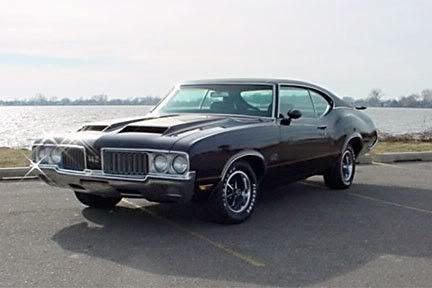
My '70 442, vacuum mechanical operated OIA with RAM
effect, ridiculous by today's fuel injected standards.
First, it is a "Resonator", and its purpose is essentially the same as a resonator in an exhaust system. A resonator is a device or system that exhibits resonance or resonant behavior, that is, it naturally oscillates at some frequencies, called its resonant frequencies, with greater amplitude than at others. The oscillations in a resonator can be either electromagnetic or mechanical (including acoustic). Resonators are used to either generate waves of specific frequencies or to select specific frequencies from a signal. Musical instruments use acoustic resonators that produce sound waves of specific tones.
What do it mean???? When you mash the pedal it makes the intake rush of air have a quite "whoosh" sound instead of a louder "waaahhhh" sound.
In other words, it is a muffler....... so mall crawling soccer mom's don't scare themselves when they pull out into traffic on the highway.
It reduces intake noise at the cost of intake efficiency because it jacks up air flow velocity and volume (ie. volume as in the amount of air that can smoothly enter the throttle body, not how loud it may be).
2wheel is correct in that the resonator chamber houses a an amount of air that when high demand is suddenly made that initial demand is pulled from within the chamber starting the resonant cycle that keeps it quiet.
Since you used the term "cold air intake", consider that open systems like the K&N are actually "warm air intakes" because their exposed filter pulls air from under the hood where it is heated by the radiator, condenser, exhaust and motor. Makes a nice sound, has good flow, but trades off volume because of heat.
Closed systems keep the filter closed within an air filter box drawing air from outside the fender, the source of the coolest air available, what I like to refer to as "Outside Air Intake". OAI has been around a long time, since the 60s, perfected for carburetor motors IMHO circa 1970 by Doc Watson at Oldsmobile . It is the model and theory of our approach to performance intake systems. Closed OAI systems rock!
My '70 442, vacuum mechanical operated OIA with RAM
effect, ridiculous by today's fuel injected standards.
Thread Starter
|
Member
Joined: Oct 2011
Posts: 92
From: Southern Illinois
Thank you for that great information. I actually learned something today!!! Nice 442
Go to Classic Car Collages - Custom Auto Photography and look at some of the classic cars that I have photographed around the country.
Thanks again!
Go to Classic Car Collages - Custom Auto Photography and look at some of the classic cars that I have photographed around the country.
Thanks again!

Senior Member
Joined: Sep 2009
Posts: 1,356
From: Connecticut
If you're thinking about installing an intake, here's the best - cold air intake systems
I've been running an Airdoc for 2 years and couldn't be happier.
I've been running an Airdoc for 2 years and couldn't be happier.

Junior Member
Joined: Nov 2011
Posts: 6
From: Wisconsin
Here is what you wanted to know:
First, it is a "Resonator", and its purpose is essentially the same as a resonator in an exhaust system. A resonator is a device or system that exhibits resonance or resonant behavior, that is, it naturally oscillates at some frequencies, called its resonant frequencies, with greater amplitude than at others. The oscillations in a resonator can be either electromagnetic or mechanical (including acoustic). Resonators are used to either generate waves of specific frequencies or to select specific frequencies from a signal. Musical instruments use acoustic resonators that produce sound waves of specific tones.
What do it mean???? When you mash the pedal it makes the intake rush of air have a quite "whoosh" sound instead of a louder "waaahhhh" sound.
In other words, it is a muffler....... so mall crawling soccer mom's don't scare themselves when they pull out into traffic on the highway.
It reduces intake noise at the cost of intake efficiency because it jacks up air flow velocity and volume (ie. volume as in the amount of air that can smoothly enter the throttle body, not how loud it may be).
2wheel is correct in that the resonator chamber houses a an amount of air that when high demand is suddenly made that initial demand is pulled from within the chamber starting the resonant cycle that keeps it quiet.
Since you used the term "cold air intake", consider that open systems like the K&N are actually "warm air intakes" because their exposed filter pulls air from under the hood where it is heated by the radiator, condenser, exhaust and motor. Makes a nice sound, has good flow, but trades off volume because of heat.
Closed systems keep the filter closed within an air filter box drawing air from outside the fender, the source of the coolest air available, what I like to refer to as "Outside Air Intake". OAI has been around a long time, since the 60s, perfected for carburetor motors IMHO circa 1970 by Doc Watson at Oldsmobile . It is the model and theory of our approach to performance intake systems. Closed OAI systems rock!
My '70 442, vacuum mechanical operated OIA with RAM
effect, ridiculous by today's fuel injected standards.

First, it is a "Resonator", and its purpose is essentially the same as a resonator in an exhaust system. A resonator is a device or system that exhibits resonance or resonant behavior, that is, it naturally oscillates at some frequencies, called its resonant frequencies, with greater amplitude than at others. The oscillations in a resonator can be either electromagnetic or mechanical (including acoustic). Resonators are used to either generate waves of specific frequencies or to select specific frequencies from a signal. Musical instruments use acoustic resonators that produce sound waves of specific tones.
What do it mean???? When you mash the pedal it makes the intake rush of air have a quite "whoosh" sound instead of a louder "waaahhhh" sound.
In other words, it is a muffler....... so mall crawling soccer mom's don't scare themselves when they pull out into traffic on the highway.
It reduces intake noise at the cost of intake efficiency because it jacks up air flow velocity and volume (ie. volume as in the amount of air that can smoothly enter the throttle body, not how loud it may be).
2wheel is correct in that the resonator chamber houses a an amount of air that when high demand is suddenly made that initial demand is pulled from within the chamber starting the resonant cycle that keeps it quiet.
Since you used the term "cold air intake", consider that open systems like the K&N are actually "warm air intakes" because their exposed filter pulls air from under the hood where it is heated by the radiator, condenser, exhaust and motor. Makes a nice sound, has good flow, but trades off volume because of heat.
Closed systems keep the filter closed within an air filter box drawing air from outside the fender, the source of the coolest air available, what I like to refer to as "Outside Air Intake". OAI has been around a long time, since the 60s, perfected for carburetor motors IMHO circa 1970 by Doc Watson at Oldsmobile . It is the model and theory of our approach to performance intake systems. Closed OAI systems rock!
My '70 442, vacuum mechanical operated OIA with RAM
effect, ridiculous by today's fuel injected standards.
